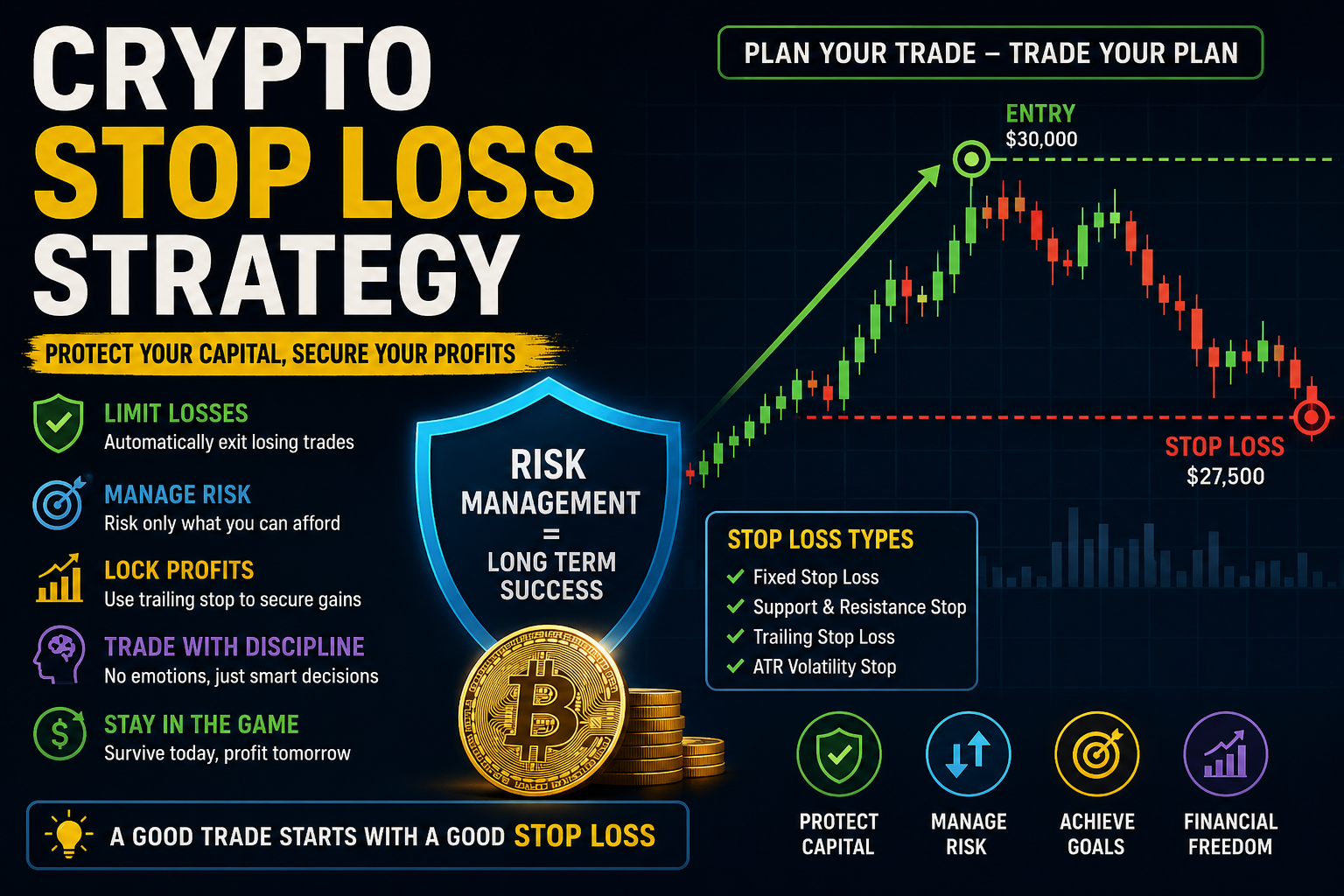
How to Manage Stop Loss in the Crypto Market: A Smart Trader’s Guide to Protecting Profits
5/23/2026
The crypto market is famous for creating massive profits, but it is also known for sudden crashes that can wipe out a trader’s account within minutes. Many beginners enter the market hoping to make quick money, but they often ignore one of the most important tools in trading: the stop loss.
A stop loss is not just a feature on a trading platform. It is your financial safety net. Professional traders survive in the market because they know how to manage risk before thinking
about profits. If you want long-term success in crypto trading, learning how to manage stop loss correctly is essential.
What Is a Stop Loss in Crypto Trading?
A stop loss is an automatic order placed on an exchange to sell your cryptocurrency when the price reaches a certain level. Its main purpose is to limit losses and protect your trading capital.
For example, imagine you buy Bitcoin at $60,000. You set a stop loss at $57,000. If the market suddenly drops, your trade will automatically close near that price, preventing a larger loss.
Without a stop loss, emotions often take control. Traders start hoping the market will recover, but sometimes prices continue falling. This is how small losses turn into devastating ones.
Why Stop Loss Is Important in the Crypto Market
The cryptocurrency market is far more volatile than stocks or forex. Prices can rise or fall by 10% to 20% within hours. Because of this extreme volatility, stop loss management becomes even more important.
Here are some key reasons why stop loss matters:
Protects your trading account from major losses
Reduces emotional decision-making
Helps maintain trading discipline
Allows better risk management
Prevents panic selling during crashes
Successful traders focus first on protecting capital. Once your money is safe, profits become easier to achieve over time.
Types of Stop Loss Strategies
Different market situations require different stop loss methods. Smart traders adjust their strategy depending on market conditions.
1. Fixed Percentage Stop Loss
This is one of the simplest methods. Traders decide a fixed percentage they are willing to lose on each trade.
For example:
Buy Ethereum at $3,000
Set a 5% stop loss
Stop loss price becomes $2,850
This method works well for beginners because it keeps risk consistent.
2. Support and Resistance Stop Loss
Professional traders often place stop losses below support levels or above resistance levels.
Support is an area where the price usually stops falling. If the price breaks below support, it may continue dropping further.
Example:
If Solana has strong support at $140, you may place your stop loss slightly below it at $137.
This strategy helps avoid getting stopped out too early during normal market movement.
3. Trailing Stop Loss
A trailing stop loss automatically moves upward as the market price rises. It helps traders lock in profits while allowing trades to continue running.
Example:
You buy Bitcoin at $50,000
You use a 5% trailing stop
Bitcoin rises to $55,000
Your stop loss automatically moves higher
If the market suddenly reverses, your profits are partially protected.
Trailing stop loss is extremely popular among swing traders and trend-following investors.
4. Volatility-Based Stop Loss
Crypto prices move differently depending on market volatility. During highly volatile periods, tight stop losses can close trades too early.
Experienced traders sometimes use indicators like Average True Range (ATR) to measure volatility and place stop losses at safer distances.
This method requires more technical knowledge but can improve trading performance significantly.
Common Mistakes Traders Make with Stop Loss
Many traders use stop losses incorrectly, which can lead to unnecessary losses.
Setting Stop Loss Too Tight
Crypto markets naturally fluctuate. If your stop loss is too close to the entry price, normal price movement may trigger it quickly.
Moving Stop Loss Emotionally
Some traders move their stop loss further down hoping the market will recover. This usually increases losses instead of reducing them.
A stop loss should be planned before entering the trade and followed with discipline.
Ignoring Market Structure
Random stop loss placement is risky. Good traders study support levels, trends, and volatility before setting stop losses.
Risking Too Much on One Trade
Never risk your entire account on a single trade. Most professional traders risk only 1% to 3% of their total capital per trade.
Best Tips for Managing Stop Loss in Crypto
Use Proper Risk Management
Before entering a trade, calculate how much money you can afford to lose comfortably. Never trade with emotional pressure.
Avoid Emotional Trading
Fear and greed are dangerous in crypto trading. Stop losses help remove emotions and keep decisions logical.
Combine Stop Loss with Take Profit
A balanced trading plan includes both stop loss and take profit targets. This improves consistency and helps maintain a healthy risk-to-reward ratio.
Adjust According to Market Conditions
During major news events or high volatility, markets may move aggressively. In such situations, wider stop losses may work better.
Keep Learning Technical Analysis
Understanding chart patterns, support zones, and resistance levels improves stop loss accuracy and reduces false exits.
Final Thoughts
Managing stop loss in the crypto market is one of the most important skills every trader must learn. Many people focus only on profits, but successful traders focus on protecting capital first. A good stop loss strategy helps you survive market crashes, control emotions, and trade with confidence.
Remember, no trader wins every trade. Losses are part of the game. The goal is not to avoid losses completely but to keep them small and manageable.
Whether you are trading Bitcoin, Ethereum, or smaller altcoins, smart stop loss management can make the difference between long-term success and losing your account.
In crypto trading, survival comes first. Profits come later.